
Choosing an Affiliate Niche: The Sandbox Rule for Overwhelmed Beginners

You’ve sat through the YouTube tutorials, built the niche comparison spreadsheets, and stared at a blank browser window, wondering which topic is safe to commit to. If choosing an affiliate niche feels like the kind of decision you can’t undo, that’s the real problem. Not you.
Standard niche selection advice treats this like picking a career path you can’t leave. No wonder most people freeze before they start. You don’t need a seventeen-step formula before you write your first sentence. You need a way to pick a direction without fear of wasting a year of your evenings.
That’s what the Two-Year Stamina Test and the Sandbox Rule are for. Your first niche is not a permanent decision. It’s a practice environment. And once you stop treating it like a marriage, picking one gets a lot simpler.
TL;DR: Choosing an Affiliate Niche
The Marriage Myth: Why Your First Niche Is Just a Sandbox
The reason most people stall on niche selection isn’t indecision. It’s that every piece of advice online treats this like a ten-year commitment. Pick wrong, and you’ve wasted years of your life. No wonder you’re frozen.
Here’s what’s actually true. Your first niche is a sandbox, not a sentence. It’s the place where you learn how to structure a post, how keyword research works in practice, and how to publish on a schedule that fits around a real job. Those skills transfer completely to any topic you choose later.
Think of it this way. A beginner who spends twelve months building in a narrow hobby learns something that doesn’t disappear when they pivot. They figure out what a low-competition keyword looks like on a brand-new site and what consistent publishing actually feels like around a full-time schedule. That knowledge moves with them.
Pivoting when you know how the system works is manageable. Pivoting before you’ve learned it is just starting over with the same problems at a new URL. Most successful affiliate marketers have changed direction at least once, and the ones who made it work had already built the skill set to carry into the next niche.
If you want a low-risk workspace to test your ideas, you can set up a free sandbox on Wealthy Affiliate today. It requires no credit card and lets you test your wings, though building a fully-featured, permanent business site will eventually require upgrading to a paid tier (which runs about $49 a month or less on yearly options).
The Two-Year Stamina Test: How to Pick a Topic You Won’t Quit
Here’s where most niche advice falls apart. It sends you straight to keyword tools, affiliate network spreadsheets, and commission rate comparisons before you’ve written a single sentence. You spend three evenings running data, and by the end of it you have numbers but still no direction. The metrics chase creates the analysis paralysis it’s supposed to cure.
Before you open a keyword tool, ask yourself one question instead. Can you write about this topic twice a week for two years, even after a long day at work, without running out of things to say or losing interest? That’s the Two-Year Stamina Test, and it’s the filter that matters most for someone building around a full-time schedule.
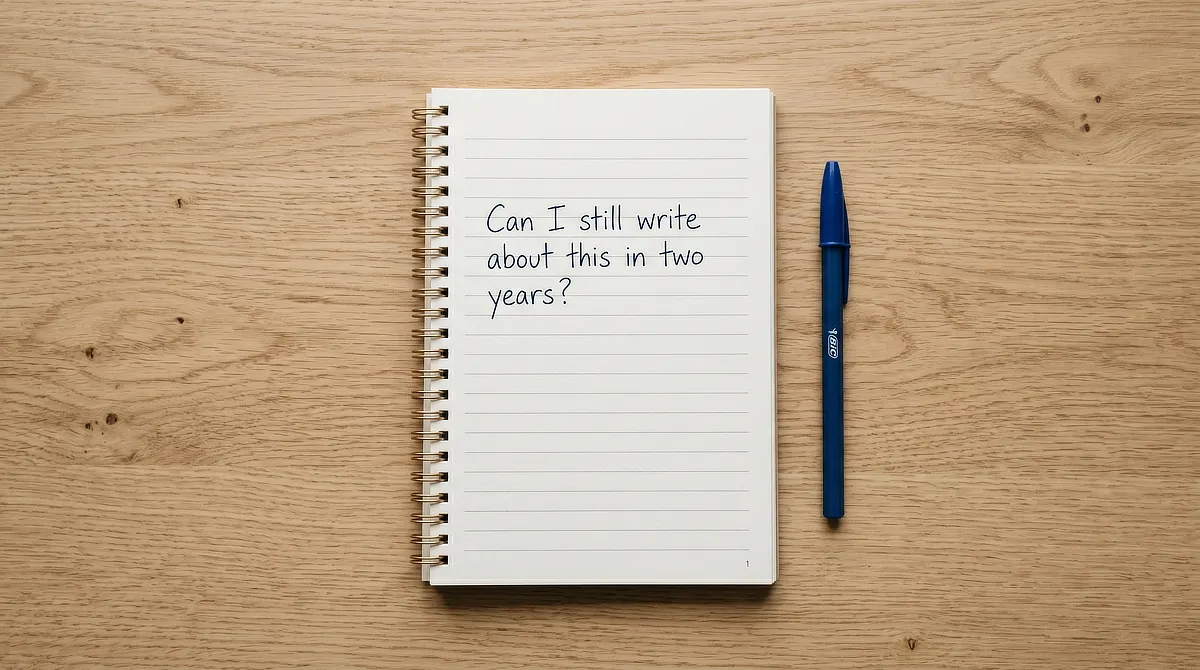
The math behind it is simple. If you publish two posts a week for twenty-four months, you have nearly two hundred pieces of content indexed (meaning Google has officially scanned and saved your pages in its search library), growing your traffic and building your authority in that niche.
This doesn’t mean writing two massive guides in one sitting. It means splitting your week: mapping outlines on Tuesday night, writing 500-word blocks on Thursday, and doing a final edit on Saturday morning.
If you quit at month four because you ran out of things to say, or because you never actually cared about the topic, none of the keyword metrics mattered. The niche with the best data is worthless if you can’t sustain the output.
Consistency beats perfection here. A beginner who publishes a useful, honest post every week for a year will outperform someone who spent months perfecting a post they never finished.
If you want a realistic picture of what the early months actually look like and when to expect traction to start building, the realistic affiliate marketing timeline for part-time builders is worth reading before you set your expectations.
The Expertise Wall: Why You Don’t Need a Degree to Build Trust
If you’ve ever thought, “I can’t write about this topic because I’m not qualified,” you’ve hit the expertise wall. It’s one of the most common reasons beginners talk themselves out of a topic they’d be genuinely good at writing about. The assumption is that readers want credentialed authority. Most of the time, they don’t.
Modern readers, especially the ones who end up trusting a site enough to buy through it, are allergic to corporate polish. They’ve read too many perfectly formatted articles that say nothing specific, make no real recommendations, and read like they were written by committee. What they respond to is transparency: a real person sharing what they’ve tested, summarizing what they’ve learned, and being honest about the limits of their experience.
“Helpful transparency” is the framework that works here. Document what you’re learning as you learn it. Summarize complex topics in plain language, and be honest about what you don’t know yet. The FTC Endorsement Guides outline what honest affiliate disclosure looks like in practice, and following them is both a legal obligation and one of the most practical trust-builders you can put on a site.
Your reader is not looking for a PhD. They’re looking for someone who took the time to figure something out and explained it clearly. That’s a standard any thoughtful beginner can meet.
The Profit Mirage: Why High-Ticket Niches Are Beginner Traps
Open any “best niches for affiliate marketing” list, and you’ll see the same names every time: crypto, weight loss, personal finance, tech gadgets. These topics appear on every list because they have genuinely high commission rates and enormous search volume. They’re also dominated by sites with hundreds of thousands of backlinks, full editorial teams, and domain authority (a score indicating how much search engines trust a site) that took fifteen years to build.
For a beginner building around a full-time schedule, competing in these spaces is not ambitious. It’s a long way to burn through your evenings producing content that will never surface on page one. The high commission rate is a mirage. You only earn commissions when people actually find your content, and a new site in crypto or weight loss will sit on page fifteen while the established players absorb all the traffic.
The better approach is to go specific. A narrow sub-niche (beginner aquarium setups, budget home recording rigs, specific craft techniques for beginners) has far less competition, a much faster path to page-one rankings, and an audience actively searching for exactly the kind of helpful, detailed content a part-time builder is well-positioned to write. You build momentum, you earn early traffic, and you see results within a realistic timeframe.
Here’s how those two approaches compare, using the lens that matters most for a part-time builder:
Topic Strategy
Target Audience Focus
Real Competition Level
Ideal Beginner Fit
The Hype Niche (crypto, weight loss, personal finance)
Broad mass market; anyone searching for general terms
Extremely high; dominated by established editorial sites with deep backlink profiles built over many years
Poor. A new site takes years to break through. High risk of burnout before meaningful traffic arrives.
The Stamina Niche (beginner hobby, specific skill, narrow daily workflow)
Focused segment; readers with specific, answerable questions
Low to moderate; many sub-niches are underserved by large content operations
Strong. Faster path to page-one rankings, earlier traffic momentum, sustainable publishing pace for a busy side-hustler.
The Hype Niche (crypto, weight loss, personal finance)
Target Audience Focus: Broad mass market; anyone searching for general terms
Real Competition Level: Extremely high; dominated by established editorial sites with deep backlink profiles built over many years
Ideal Beginner Fit: Poor. A new site takes years to break through. High risk of burnout before meaningful traffic arrives.
The Stamina Niche (beginner hobby, specific skill, narrow daily workflow)
Target Audience Focus: Focused segment; readers with specific, answerable questions
Real Competition Level: Low to moderate; many sub-niches are underserved by large content operations
Ideal Beginner Fit: Strong. Faster path to page-one rankings, earlier traffic momentum, sustainable publishing pace for a busy side-hustler.
If you find yourself gravitating toward a high-commission topic but you’re not sure whether you’re following the data or overthinking the decision, overthinking your first affiliate niche walks you through how to untangle that.
The Sandbox Rule: How to Protect Yourself from Tech Lock-In
Here’s where the technical side of niche selection trips people up in ways they don’t anticipate. Most beginners, once they pick a topic, immediately go shopping: hosting subscription, domain registrar, keyword tool, content planner, and analytics add-on.
By the time they’re done setting up, they have five monthly fees and tools that don’t talk to each other. Then they write one post, decide the niche isn’t working, and starting over feels so expensive and tangled that they quit instead.
That’s what the Sandbox Rule is designed to prevent. Build your first site inside an integrated ecosystem, not a patchwork of single-purpose subscriptions. When your hosting, keyword research, content workspace, and community support live under one roof, testing a niche and pivoting away from it is straightforward. You’re not trapped by sunk costs in five separate tools.

That’s what the Sandbox Rule actually gives you: room to build, test, and change direction without the financial friction of starting from scratch.
If you want to see what a purpose-built sandbox environment actually looks like for a beginner, see how an integrated sandbox environment protects you from tech lock-in before you start buying tools separately.
What to Do Next: Your 3-Step Action Plan for Tonight
The gap between choosing a niche and actually building an affiliate site is three specific steps, and you can start all three of them tonight. The only wrong move is to close this post and go back to the keyword spreadsheets.
Step 1: Brainstorm three topics you already think about.
Don’t start with ‘what’s profitable.’ Start with what you already discuss with people, research on your own time, or find yourself reading about even when nobody asked you to. These are the topics where your interest is genuine enough to sustain two years of consistent writing. Write them down before you evaluate anything else.
Step 2: Filter each one through the Two-Year Stamina Test.
For each topic on your list, ask the one question that matters: can you write about this twice a week, around your full-time schedule, for two years without running out of things to say? Put the keyword tools away entirely for this step. The stamina question is a writing test, not a data test. The topic that clears this filter is your starting niche.
Step 3: Set up your workspace and write your first helpful paragraph.
Don’t aim to finish a post today. Write one paragraph about something specific your reader is stuck on, using the topic you just chose. Starting builds skills that planning never does.
If you want to speed up the topic-testing process, use AI to speed up niche selection covers a practical framework for running this in a single focused session instead of spreading it across three evenings.
Your first niche doesn’t have to be perfect. It has to be good enough to start building the skills that make every future niche easier. Pick one, set up a workspace you can actually build in without fighting the tech, and write something. That’s the whole plan.
Let’s Find Your Niche Together
If you’re trying to decide between two niches or you’re stuck wondering whether your topic passes the stamina test, drop your ideas in the comments below. I read and reply to everyone.

Sonia Zannoni
Hi, I’m Sonia Zannoni, creator of Click to Prosper. I share practical tools, workflows, and honest guidance to help you build an online business with more clarity and less chaos.
About Sonia
Feeling stuck between too many tools and too much advice? Start with the beginner path.
View the Blueprint